What Is a Tier List Template and What Can You Rank With One
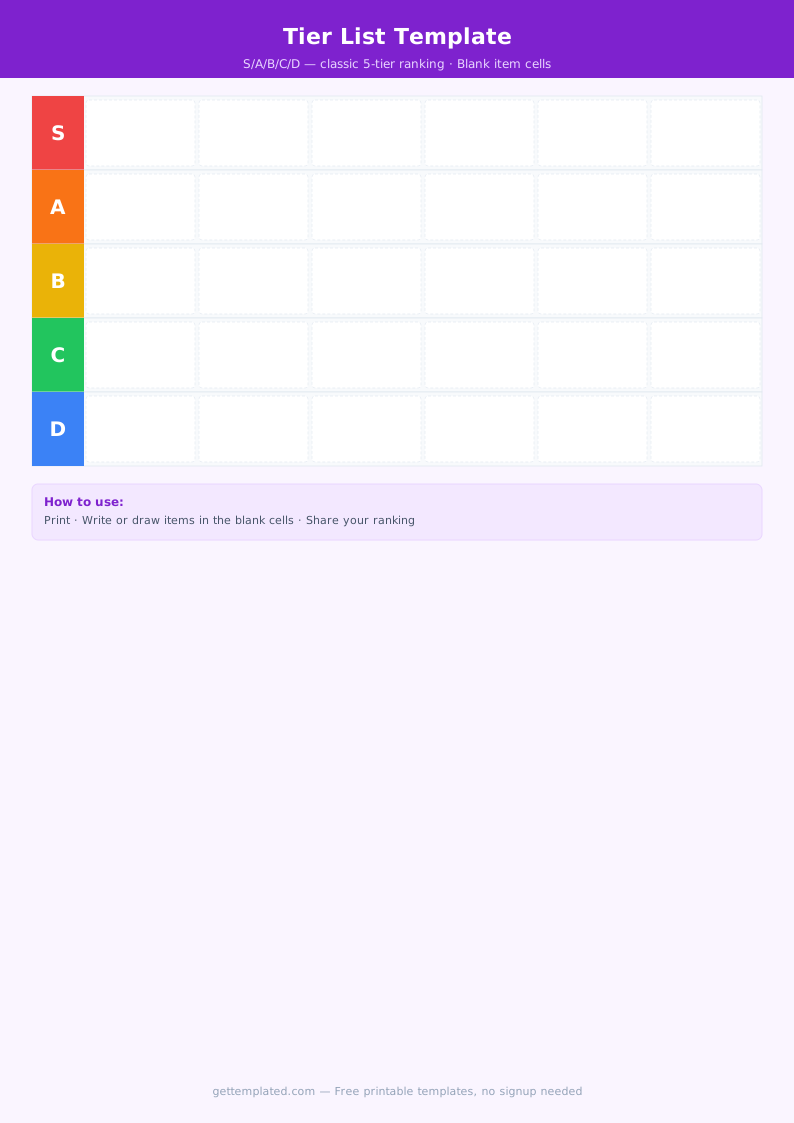
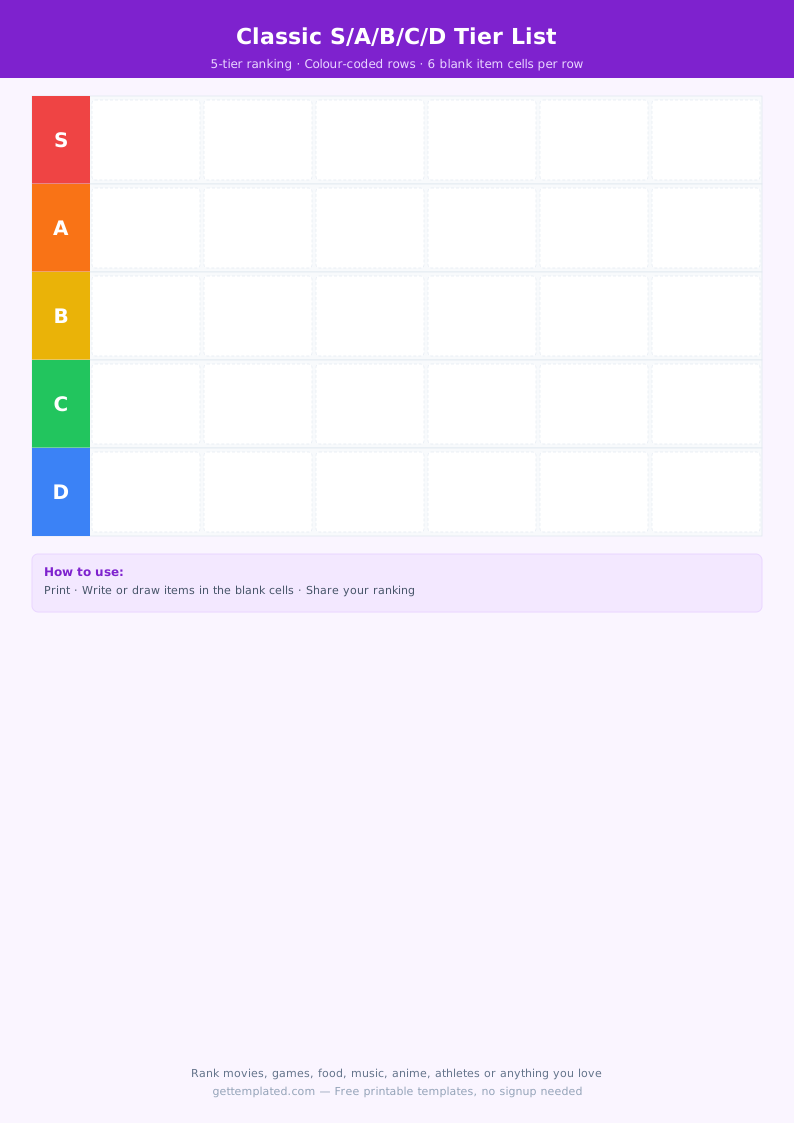
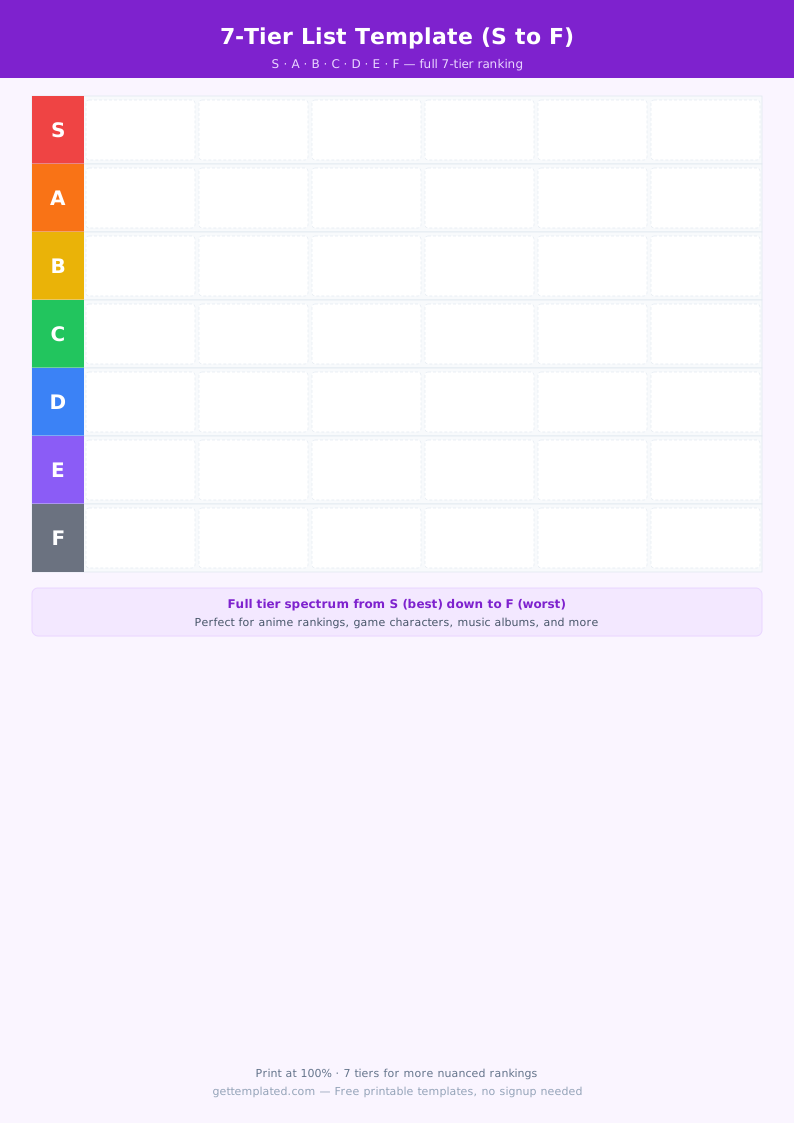
A tier list template is a grid-based ranking document that groups items into labeled tiers, most commonly S (superior or best), A (great), B (good), C (average), D (below average), and F (worst). The format comes from gaming communities where it was originally used to rank fighting game characters by competitive strength, but it has spread into almost every area of popular culture and practical decision-making.
The core idea is simple: instead of ranking a list from 1 to 100, you group items into a small number of quality buckets. This makes it easy to communicate nuanced opinions without obsessing over whether something is #7 or #9 on an absolute scale. Items in the same tier are roughly equal; the tiers themselves communicate the hierarchy.
- Video game characters, weapons, classes, or strategies ranked by competitive viability
- Movies, TV shows, albums, or books ranked by personal preference or critical quality
- Foods, restaurants, snacks, or cuisines ranked for taste, value, or quality
- Sports players, teams, or seasons ranked by performance
- Products, software tools, or services ranked by value or features
- School subjects, workout routines, travel destinations, or any personal preference list
What to Include in Your Tier List
A good tier list template has a few key components. The structure you choose depends on what you are ranking and how many tiers you need.
- Title: State what you are ranking at the top so anyone reading the list immediately understands the context
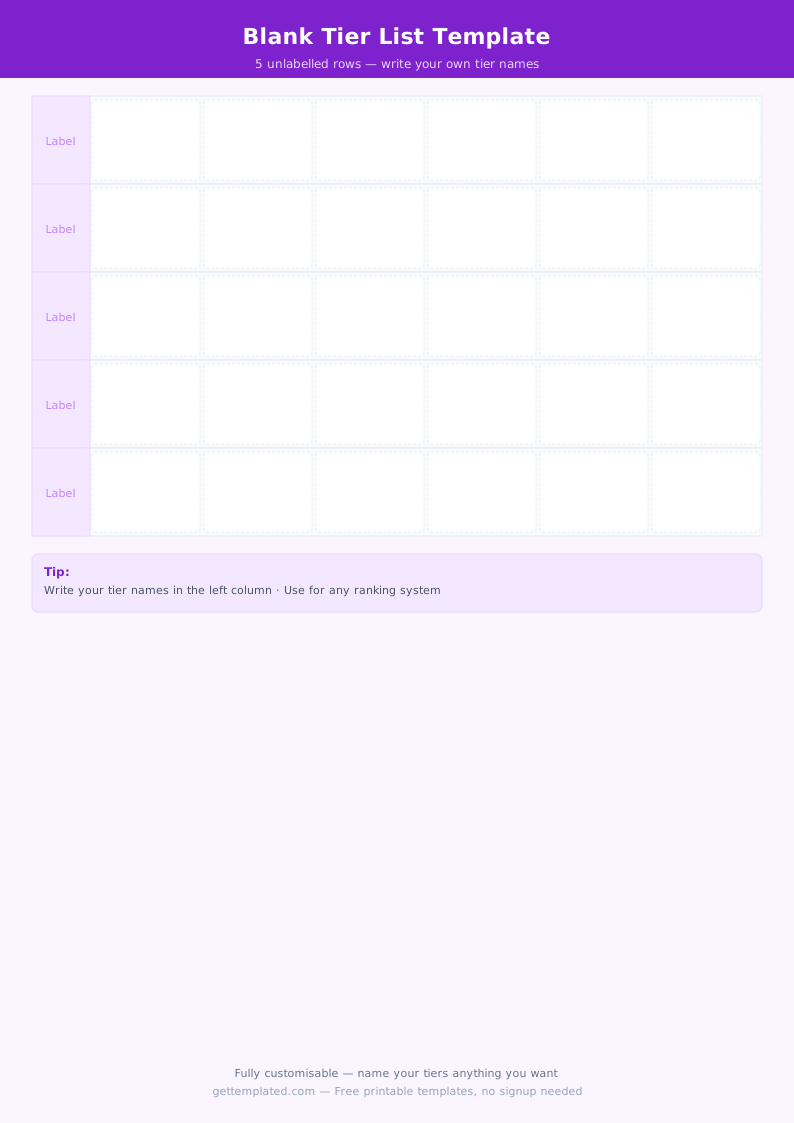
- Tier labels: S-A-B-C-D is the most widely recognized system, but you can use numbers (1-5), letter grades, custom labels (Elite/Great/Good/Mediocre/Bad), or color-coded tiers
- Tier descriptions: A short phrase next to each tier label helps readers understand your criteria (e.g., 'S = must-have', 'D = skip it')
- Items in each tier: Place each item you are ranking into exactly one tier. Include the full name or a clear identifier for each item
- Criteria or notes: A brief explanation of how you decided what belongs in each tier adds credibility and makes the list more useful to others
- Date or version: If you plan to update the list over time, add a date so viewers know which version they are looking at
How to Make a Tier List Using This Template
This tier list template can be used as a printable document you fill in by hand, or as an editable file in Google Docs or Word. Here is how to use it from start to finish.
- Decide what you are ranking and write a clear title at the top of the template
- List every item you plan to rank before you start placing them in tiers. Having the full list in front of you prevents you from placing early items too high just because you had not evaluated the rest yet
- Set your criteria. Ask yourself: what makes something S-tier versus A-tier for this topic? Write a one-line definition for each tier before you start placing items
- Place the most obvious cases first. Put the items you are most confident about into their tiers, then work through the harder calls
- Review the completed list and check that every tier makes sense relative to the others. It is common to find that everything ended up in S and A because you were being too generous
- Add a notes section at the bottom to explain any controversial placements or to acknowledge what your criteria do not capture
- If sharing the list with others, export or print the finished template as a PDF to lock the formatting
Common Tier List Types and How They Differ
Not all tier lists work the same way. The structure that works for ranking fighting game characters is different from what you would use for ranking recipes or software tools.
Gaming tier lists focus on competitive viability. An S-tier character in a fighting game or strategy game beats other options in high-level play. A D-tier pick may be fun but puts you at a statistical disadvantage. Gaming tier lists are usually maintained by the community and updated after patches or balance changes.
Opinion tier lists (movies, food, music) are personal and subjective. The criteria are individual taste, which means two people can make very different tier lists for the same set of items without either being wrong. These lists are meant to spark conversation, not settle objective debates.
Product or tool tier lists are a hybrid: partly objective (does it do what it claims?) and partly subjective (does it fit my specific needs?). These work best when you state your criteria clearly upfront.
Printable tier list templates are especially popular for classrooms, where teachers use them as discussion activities: each student fills in their own tier list for a set of books, historical figures, or scientific concepts, then the class compares results.
Tier List Tips and Mistakes to Avoid
Even a simple tier list can mislead if the criteria are unclear or the tiers are unbalanced. These tips will help you create a list that is genuinely useful and defensible.
- Define your criteria before you start placing items: 'S-tier means I would recommend it to anyone without reservation' is more useful than leaving the label undefined
- Avoid tier inflation: If everything ends up in S or A, the list is not useful. A good tier list has items spread across at least three or four tiers
- Use the F tier sparingly: Putting something in F-tier (worst possible) is a strong statement. Reserve it for items that are genuinely broken, harmful, or useless rather than merely mediocre
- Acknowledge bias: If you have limited experience with some items on the list, note it. A tier list based on personal experience is more honest than one that implies comprehensive expertise
- Update regularly: Tier lists for ongoing topics (game metas, product categories) go stale. Add a version date and revisit the list when conditions change
- Keep items in the same tier comparable: Do not mix 10 items in one tier with 1 item in the next. If the numbers are very uneven, reconsider your tier boundaries
The template