What Is a Pitch Deck Template?
A pitch deck template is a pre-structured slide presentation that guides startup founders and entrepreneurs through the standard narrative investors and accelerators expect to see. Instead of building slides from scratch, a template ensures you cover every critical section in the right sequence, with the right level of detail for each slide.
The pitch deck format became standard largely because of early-stage investor presentations in the startup ecosystem. Most seed and venture investors review hundreds of decks per year, and they have come to expect a specific flow: problem, solution, market, product, traction, team, financials, and ask. Deviating from this structure without good reason tends to create friction in the review process.
Beyond fundraising, a pitch deck also serves as a concise business summary you can use for accelerator applications, strategic partnership conversations, board presentations, and even internal alignment among co-founders.
- Defines the customer problem and your specific solution
- Quantifies the market opportunity with addressable market sizing
- Demonstrates traction with concrete metrics or early customer evidence
- Communicates the business model and revenue approach
- Presents the team and why you are the right group to execute this
- Closes with a clear funding ask and use of proceeds
What to Include in a Pitch Deck
The most effective pitch decks are tight and specific. Investors do not need 30 slides; they need to understand your business quickly and feel confident in your thinking. Here are the slides every pitch deck template should include:
- Cover slide: company name, tagline, your name and contact, and the date
- Problem: the specific pain point your target customer experiences, described in concrete terms
- Solution: what your product or service does, stated plainly without technical jargon
- Market opportunity: your serviceable addressable market (SAM) and total addressable market (TAM) with a credible sizing method
- Product or how it works: a screenshot, mockup, or step-by-step description of the customer experience
- Business model: how you charge, at what price point, and your primary customer acquisition channel
- Traction: revenue, active users, growth rate, pilots, letters of intent, or other proof of demand
- Team: founder backgrounds and why this team is uniquely qualified to solve this problem
- Competition: who customers currently use as alternatives and what makes you different
- Financial projections: three-year revenue forecast with key assumptions clearly stated
- The ask: amount raising, instrument type, use of funds, and resulting runway
How to Build a Pitch Deck Using This Template
Follow these steps to turn the template into an investor-ready deck. For an elevator pitch format, focus on slides 1 through 3, 6, 8, and 11 and keep total length to five slides or fewer.
- Open the template in Google Slides and make a copy to your own Drive
- Write the problem slide first using specific language about who suffers from the problem and what it costs them
- State your solution in two to three plain sentences, then add a screenshot or mockup on the product slide
- Size your market from the bottom up: estimate your target customer count multiplied by your annual contract value
- Add your traction evidence, even if early; pre-revenue companies should show waitlist size, pilot conversations, or customer interview quotes
- Fill in the business model slide with your actual pricing and the one or two acquisition channels you will focus on first
- Build financial projections from unit economics, not top-down percentages; show the assumptions behind the numbers
- Complete the team slide with the 1-2 credentials per person that are most relevant to executing this specific business
- Set the ask slide last: decide on the instrument, amount, and use of funds before writing this slide
- Review the full deck for consistency; every slide should support the same core narrative
Pitch Deck Formats and Variations
The right pitch deck format depends on the context. An elevator pitch template has different requirements than a full Series A deck. Here are the most common variations:
- Elevator pitch template: a condensed 5-7 slide version focused on problem, solution, traction, and ask; used when you have limited time or need a quick leave-behind
- Seed deck: a standard 10-12 slide deck for pre-seed and seed rounds, emphasizing problem validation, early traction, and team credentials
- Series A pitch deck: a more detailed 15-20 slide version with stronger emphasis on unit economics, growth metrics, competitive moat, and a detailed financial model
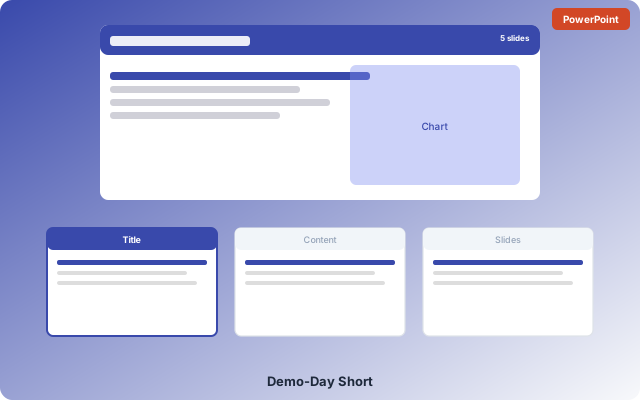
- Demo day deck: a visual-heavy, fast-paced format optimized for live presentations to a room of investors, typically 3-5 minutes long
- Investor update deck: a shorter format for existing investors showing progress since last round; covers key metrics, milestones hit, and current challenges
- Accelerator application deck: follows the specific criteria of programs like Y Combinator or Techstars, often requiring a video alongside the slides
Pitch Deck Tips and Common Mistakes
Most pitch decks are rejected not because the business is bad but because the deck fails to communicate clearly. These are the most common mistakes and how to fix them.
- Opening with the solution before explaining the problem: investors need to feel the pain before they can appreciate the fix; always lead with a concrete problem
- Using vague market size numbers: saying the market is worth billions without explaining who specifically will pay you is a red flag; size from the bottom up
- Skipping traction entirely: even pre-revenue companies have evidence of demand; customer interviews, waitlists, and pilot agreements all count
- Burying the ask: state the amount and instrument clearly on the final slide; investors need to know whether the check size fits their portfolio
- Including too much text on each slide: a pitch deck is a visual aid, not a memo; aim for one idea per slide and a headline that stands on its own
- Not knowing your numbers: be able to speak to gross margin, customer acquisition cost, and lifetime value even if the deck only shows summary figures
- Ignoring competition: claiming you have no competitors signals a lack of market research; every solution has alternatives customers currently use
The template